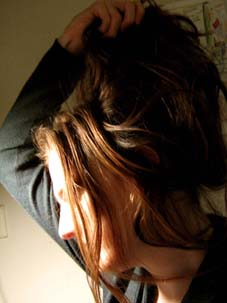
An exhibition by Swedish artist Britt Marie Trensmar explores new sides of the male role. According to her men are too often portrayed as 'agressive macho-types'. Therefore she has, for the last year, encouraged women to send her photos of their men. Right now the exhibition is in Stockholm but a selection of pictures are also available on the web.
"I thought it was boring, one-sided and uninspiring ('åndsfattigt' in Danish) to see the same images day after day, year after year! I was bored. We needed new images that could go against those that glorified the agressive man and that we knew from Hollywood, the sports world, the fashion and advertising business and to some extent the daily news. How else will we change the male role for the better? At least I demand a greater variation," says Britt Marie Trensmar to the Danish newspaper Politiken (15th of October 2006).
See some of the photographs at the project web page (the section is called "utvalta bidrag") or take a look at Trensmar's book "Play the Man". The latter is also an interesting initiative. To me the introduction to the book frames the experience of looking at the images very well:
"Her images challenge us, and generate disgust as well as delight. The pairing of these images and words alerts us to the fact that images of men as sexual and sensual beings apparently touches a raw nerve, even in a society that thinks it's seen it all."
How do you feel about them?
Tuesday, October 17, 2006

Real beauty?
In spite the 'Campaign for Real Beauty' might have a bit too much commercial involvement for my flavour the intend is still laudable and worth a mention. The Danish national campaign takes place in cooperation with the National Eating Disorders Association
And not to forget: the video is really impressive!
Danish campaign web page
International campaign web page
And not to forget: the video is really impressive!
Danish campaign web page
International campaign web page
Saturday, October 14, 2006
A new voter segment for the Danish People's Party?
A month ago the youth division of the Danish People's Party* launched a new website.
Under the headline "report your teacher" the organization encourages people to write down their personal experiences with what is referred to as "indoctrination" in the Danish educational system. Meaning, if you have experienced any discrimination due to you political convictions you are invited to report them on the web page. The web page explains "indoctrination" as:
"Indoctrination can be more or less obvious. Some teachers have a relationship to the Danish People's Party that is so strained that they cannot stop themselves harassing students that are members of or sympathize with the Danish People's Party. It can be verbally, but it can also occur in terms of unfair grading."
Whether it is a commitment to the Danish People's Party that has resulted in the harassment that Kazim here reports on I cannot say. Nevertheless, it must be good news for the Danish People's Party that its youth branch - in spite of its decreasing popularity due to recent events - attracts new members.
"When I started my education at the Aalborg Technical School people stared at me and my teacher asked if I had paid for my bike myself. Several times daily I was verbally assaulted by other students that said things like "go home" and "you smell like camel".
During the Muhammad crisis I was daily the victim of mocking, people called me "turban Kazim" and asked me if I had been examined for bombs. My teacher even asked me if I shouldn't have begun training as a pilot.
I think it is great that you have taken this initiative and I am considering joining your organization."
--------------------
* Correct, it was these guys who did those nasty drawings at a summer camp. Let us leave that aside. It seems to be a general problem among young members of the Danish political parties that they loose control when alcoholic beverages and drawing implements are available at the same time.
Under the headline "report your teacher" the organization encourages people to write down their personal experiences with what is referred to as "indoctrination" in the Danish educational system. Meaning, if you have experienced any discrimination due to you political convictions you are invited to report them on the web page. The web page explains "indoctrination" as:
"Indoctrination can be more or less obvious. Some teachers have a relationship to the Danish People's Party that is so strained that they cannot stop themselves harassing students that are members of or sympathize with the Danish People's Party. It can be verbally, but it can also occur in terms of unfair grading."
Whether it is a commitment to the Danish People's Party that has resulted in the harassment that Kazim here reports on I cannot say. Nevertheless, it must be good news for the Danish People's Party that its youth branch - in spite of its decreasing popularity due to recent events - attracts new members.
"When I started my education at the Aalborg Technical School people stared at me and my teacher asked if I had paid for my bike myself. Several times daily I was verbally assaulted by other students that said things like "go home" and "you smell like camel".
During the Muhammad crisis I was daily the victim of mocking, people called me "turban Kazim" and asked me if I had been examined for bombs. My teacher even asked me if I shouldn't have begun training as a pilot.
I think it is great that you have taken this initiative and I am considering joining your organization."
--------------------
* Correct, it was these guys who did those nasty drawings at a summer camp. Let us leave that aside. It seems to be a general problem among young members of the Danish political parties that they loose control when alcoholic beverages and drawing implements are available at the same time.
Friday, October 13, 2006
A few words on power structures and women
Today I saw a very interesting definition of sexism. Jacob Holdt answers the question "can blacks be racists, women sexists and so forth?"
"No, they have no social power to in any way harm the power structure of whites (or e.g. men). Example: if all blacks hated whites how would they affect whites? Only through fear. Whites solve this problem by moving out in the suburbs or visiting a psychologist. If, on the other hand, all whites have negative emotions towards black people, how will they harm them? In relation to work, health care, education, housing etc. All very tangible things that you need to consult whites to get access to. It is easy to see that blacks cannot be racists because they do not in any way have power to discriminate whites."
If we draw parallel to the issue of gender it means that women cannot be sexists because they are not in a social position to discriminate men.
Allow me to explain why I think Jacob Holdt is making a valid point.
Firstly, on a global level: according to statistics 99 percent of the world's property belongs to men. Further, 90 percent of incomes goes to men (These are widely recognized numbers but one source is Jackson & Sörensen 2003). From a global perspective there is not much to discuss. Women clearly have no power to discriminate men.
Property and incomes are of course even more unfairly distributed. Women in Africa, South America and Asia are for sure worse off than women in the Western world. So I will focus a bit more. In this context it is interesting to take a look at Denmark since it is a country known for a high degree of gender equality. Are the women in Denmark in a position to discriminate men? Let us examine the Danish elites:
- Danish business life is run by men: 96 percent of Danish chief executives are men
- Danish academia is run by men: 93 percent of university professors are men
- Danish media are run by men: 87 percent of chief editors are men
- Men constitute a majority in the Danish government: 62 percent of ministers are men
(Sources: lige.dk and A4)
Examining power structures it seems that Danish women are not really in a position from where they can effectively discriminate men. The number of women in control of money, law-making and information is very limited.
Conclusion I: women cannot be sexists.
Conclusions II: Ideas such as that of organized feminist conspiracies against men are completely unrealistic. Why such theories exist is probably better explained by what Susan Faludi calls 'the backlash against women' than by actual activities among women.
(If anyone are in doubt: As a feminist my hope is not that women one day will begin discriminate men. I want women to gain more power and to live in a society with gender equality)
"No, they have no social power to in any way harm the power structure of whites (or e.g. men). Example: if all blacks hated whites how would they affect whites? Only through fear. Whites solve this problem by moving out in the suburbs or visiting a psychologist. If, on the other hand, all whites have negative emotions towards black people, how will they harm them? In relation to work, health care, education, housing etc. All very tangible things that you need to consult whites to get access to. It is easy to see that blacks cannot be racists because they do not in any way have power to discriminate whites."
If we draw parallel to the issue of gender it means that women cannot be sexists because they are not in a social position to discriminate men.
Allow me to explain why I think Jacob Holdt is making a valid point.
Firstly, on a global level: according to statistics 99 percent of the world's property belongs to men. Further, 90 percent of incomes goes to men (These are widely recognized numbers but one source is Jackson & Sörensen 2003). From a global perspective there is not much to discuss. Women clearly have no power to discriminate men.
Property and incomes are of course even more unfairly distributed. Women in Africa, South America and Asia are for sure worse off than women in the Western world. So I will focus a bit more. In this context it is interesting to take a look at Denmark since it is a country known for a high degree of gender equality. Are the women in Denmark in a position to discriminate men? Let us examine the Danish elites:
- Danish business life is run by men: 96 percent of Danish chief executives are men
- Danish academia is run by men: 93 percent of university professors are men
- Danish media are run by men: 87 percent of chief editors are men
- Men constitute a majority in the Danish government: 62 percent of ministers are men
(Sources: lige.dk and A4)
Examining power structures it seems that Danish women are not really in a position from where they can effectively discriminate men. The number of women in control of money, law-making and information is very limited.
Conclusion I: women cannot be sexists.
Conclusions II: Ideas such as that of organized feminist conspiracies against men are completely unrealistic. Why such theories exist is probably better explained by what Susan Faludi calls 'the backlash against women' than by actual activities among women.
(If anyone are in doubt: As a feminist my hope is not that women one day will begin discriminate men. I want women to gain more power and to live in a society with gender equality)
Thursday, October 12, 2006
A new citizens initiative

Following the succesful Oneseat-campaign another European citizens initiative has seen the light of the day. Now it is time for a million Europeans to unite against nuclear power.
Read more or sign at the website
Now we just need a European constitution that can provide a legal backbone to these democracy initiatives. Article 47 of the proposed constitution said that if one million Europeans signed up for a particular cause then the European Commission would be obliged to make a legislative proposal.
If Oneseat and the Nuclear Power campaign will have any effect we will have to thank the European Commission for its good will. Since the proposal for a European constitution was rejected about a year ago there are no laws saying they should be responsive to citizen initiatives. For sure, Europe needs a better legislative basis for democracy and citizen participation. For sure, I am looking forward to a new proposal for a constitution.
PS - the long silence on this blog was due to vacation and traveling. Now I am settled in Germany and should (hopefully) be posting more often.
Wednesday, October 11, 2006
Sophisticated media critique
I think most people can recognize the comfortable feeling of turning on the TV that this song by the Swedish electronica duo 'The Knife' conveys. It feels so good but still we know it is bad.
We can not wait much longer
We want happiness back
We want control of our bodies
Everything we've lacked
I think I even liked it
If the feeling was mine
A little something about my body
Is it the warmth inside
When we come home, we want it quiet and calm
We want you to sing us a song
When we come home, we pull the curtains down
Making sure that the TV is on
If you move a little closer
I'll tell you what's my aim
It's every evening on a big screen
Hosted by celebrities
I had a dream about deleting and killer whales
Is it the feeling of your body
Or is it the feeling of mine
When we come home, we want it quiet and calm
We want you to be around
When we come home, we pull the curtains down
Making sure that the TV is on
From off to on
From off to on
Watch videos with The Knife here. Impressive, but somewhat disturbing.
We can not wait much longer
We want happiness back
We want control of our bodies
Everything we've lacked
I think I even liked it
If the feeling was mine
A little something about my body
Is it the warmth inside
When we come home, we want it quiet and calm
We want you to sing us a song
When we come home, we pull the curtains down
Making sure that the TV is on
If you move a little closer
I'll tell you what's my aim
It's every evening on a big screen
Hosted by celebrities
I had a dream about deleting and killer whales
Is it the feeling of your body
Or is it the feeling of mine
When we come home, we want it quiet and calm
We want you to be around
When we come home, we pull the curtains down
Making sure that the TV is on
From off to on
From off to on
Watch videos with The Knife here. Impressive, but somewhat disturbing.
Thursday, September 21, 2006
European citizens speak up
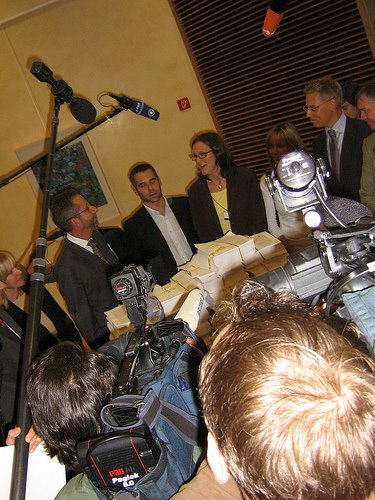
Today I walked with Cecilia Malmström and a small army of journalists to the Berlaymont to hand over one million signatures from European citizens to the EU Commission.
The hand-over was the final part of the Oneseat-campaign which aim was to gather a million signatures against the European Parliament's second seat in Strasbourg.
Unfortunately Margot Wallström was not able to attend since she is in Sweden due to a restructuring of her political party, the Swedish social democrats (they lost the recent national elections).
Malmström said at the press conference:
"The Strasbourg issue is something Europeans really care about. We hope people all over the EU will be inspired by this and take new citizens' initiatives"
With this I can only agree.
See more photos at flickr
It is still possible to sign on the webpage www.oneseat.eu
Tuesday, September 19, 2006
They didn't win...
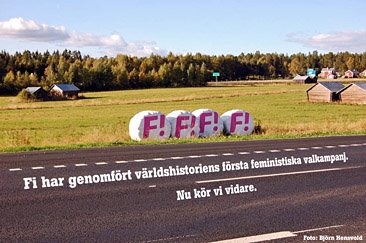
... but they made a statement!
The text on the picture says "Fi has completed the world's first feminist election campaign. Now we are moving on"
Fi is short for Feministiskt Initiativ, the feminist party in Sweden.
Monday, September 18, 2006
One million Europeans have signed against Strasbourg
Each year 200 million Euro are spend on moving the European Parliament between its two seats in Brussels and Strasbourg in France.
Today the European campaign 'Oneseat' reached its goal: one million Europeans have signed a petitition for a permanent seat in Brussels.
Now it will be interesting to see what will happen. The webpage of Cecilia Malmström (Swedish member of the parliament), who started the petition, explains:
"... when commissioner Margot Wallström said that she, in the framework of her plan D (for democracy, dialogue and debate), hopes to see a few citizens’ initiatives land at her desk, the idea of letting the Strasbourg issue become subject to a campaign started to grow. The citizen’s initiative, as described in the article 47 on participatory democracy in the proposed Constitution, allows for the EU citizens to become more active and to participate on European issues. If any petition collects one million signatures, the commission promises to raise the question. Mrs Wallström’s statement that she considers this initiative valid, independently of what happens to the constitution, is to be welcomed."
In spite of good will there is a limit to what Wallström can do. Legally, the Council of the European Union has the final say in the debate about Strasbourg. Meaning, it will be Europe's heads of states that will make the decision in the end. And whether they will be able to reach an agreement on the matter is doubtful. For sure Chirac will oppose the idea. Strasbourg is the symbol of peace between France and Germany and the seat is far to prestigious for the French to let go of it.
The monthly Strasbourg trips are a waste of time and money. Even a waste of space if you consider the suggestion that the Strasbourg building could accomodate a prominent pan-European university.
Today the European campaign 'Oneseat' reached its goal: one million Europeans have signed a petitition for a permanent seat in Brussels.
Now it will be interesting to see what will happen. The webpage of Cecilia Malmström (Swedish member of the parliament), who started the petition, explains:
"... when commissioner Margot Wallström said that she, in the framework of her plan D (for democracy, dialogue and debate), hopes to see a few citizens’ initiatives land at her desk, the idea of letting the Strasbourg issue become subject to a campaign started to grow. The citizen’s initiative, as described in the article 47 on participatory democracy in the proposed Constitution, allows for the EU citizens to become more active and to participate on European issues. If any petition collects one million signatures, the commission promises to raise the question. Mrs Wallström’s statement that she considers this initiative valid, independently of what happens to the constitution, is to be welcomed."
In spite of good will there is a limit to what Wallström can do. Legally, the Council of the European Union has the final say in the debate about Strasbourg. Meaning, it will be Europe's heads of states that will make the decision in the end. And whether they will be able to reach an agreement on the matter is doubtful. For sure Chirac will oppose the idea. Strasbourg is the symbol of peace between France and Germany and the seat is far to prestigious for the French to let go of it.
The monthly Strasbourg trips are a waste of time and money. Even a waste of space if you consider the suggestion that the Strasbourg building could accomodate a prominent pan-European university.
Sunday, September 17, 2006
Danish media are run by men
A report from the weekly newsletter A4 (published by The Danish Confederation of Trade Unions) reveals that more than half of Denmark's nationwide newspapers does not have a single woman in the editorial management. In spite the fact that 40 percent of the members of the Danish Journalist Union are female it is still to a very large extend men who are in power in the media business.
Media expert Rasmus Jønsson says to A4:
"It is a men's club of old friends who see things from the same perspective, move in the same circles, are raised by each other and have followed the same career path. The problem is not just that there is an overrepresentation of men - these men are also alike. And that has a consequence for the way they shape media."
Ask Rostrup, chief editor at MetroXpress (part of the Metro chain) seems to agree that more women are needed:
"It is about having the best blend of people because it reflects the society media are to describe. When you have to develop ideas it is a problem if everyone relate to the same reality."
Good point. Still Rostrup has hired two men as his closest colleagues. Both of them having worked as journalists at MetroXpress a long time before they were promoted - one even being Rostrup's old fellow student. And as with most other editorial positions the vacant jobs were never advertised. The editor-in-chief explains:
"They were both obvious candidates."
Key to better representation in the media business must be that editors begin to hire people that are not mirrored images of themselves. For example by recruiting from outside the "men's club".
This could also be an effective way of expanding readership. According to A4 consumers of newspapers are the same as those who produce them: Middle-aged men.
Media expert Rasmus Jønsson says to A4:
"It is a men's club of old friends who see things from the same perspective, move in the same circles, are raised by each other and have followed the same career path. The problem is not just that there is an overrepresentation of men - these men are also alike. And that has a consequence for the way they shape media."
Ask Rostrup, chief editor at MetroXpress (part of the Metro chain) seems to agree that more women are needed:
"It is about having the best blend of people because it reflects the society media are to describe. When you have to develop ideas it is a problem if everyone relate to the same reality."
Good point. Still Rostrup has hired two men as his closest colleagues. Both of them having worked as journalists at MetroXpress a long time before they were promoted - one even being Rostrup's old fellow student. And as with most other editorial positions the vacant jobs were never advertised. The editor-in-chief explains:
"They were both obvious candidates."
Key to better representation in the media business must be that editors begin to hire people that are not mirrored images of themselves. For example by recruiting from outside the "men's club".
This could also be an effective way of expanding readership. According to A4 consumers of newspapers are the same as those who produce them: Middle-aged men.
Saturday, September 16, 2006
Jane Fonda visits Swedish feminist party
"Come on, vote for the feminists!" said American movie and aerobic star Jane Fonda yesterday. She visited Sweden in connection with the national elections that will take place this Sunday and to give her support to the Swedish feminist party "Feministiskt initiativ".
It seems Jane Fonda has really understood what modern feminism is all about. She says to the Danish newspaper Politiken:
"To some the idea about a feministic party may appear threatening. But it is not about turning the patriarchy into a matriarchy. It is about turning the patriarchy into a democracy. That is what feminism represents."
At the moment, though, the Swedish feminist party is far from victory. They need 4 percent of the votes to enter the parliament. According to polls they are to get only 1 percent.
Go, F!
It seems Jane Fonda has really understood what modern feminism is all about. She says to the Danish newspaper Politiken:
"To some the idea about a feministic party may appear threatening. But it is not about turning the patriarchy into a matriarchy. It is about turning the patriarchy into a democracy. That is what feminism represents."
At the moment, though, the Swedish feminist party is far from victory. They need 4 percent of the votes to enter the parliament. According to polls they are to get only 1 percent.
Go, F!
Thursday, September 14, 2006
Famous feminist #4
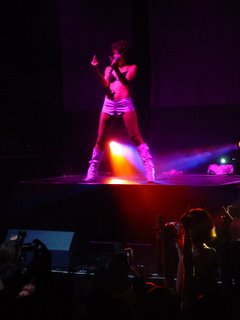 Merrill Beth Nisker (born 1968), better known as Peaches, is an electroclash artist. Her songs are mainly concerned with sex. Before she became "Peaches," she was an elementary school teacher and librarian.
She plays almost all the instruments for her songs, programs her own electronic beats and produces her records.Her songs have been featured in movies such as Mean Girls, My Little Eye and Lost in Translation. Her music has also been featured on Showtime's The L Word television series. Peaches performed guest vocals on Pink's album Try This, on the song "Oh My God." She has been invited to lecture at the Contemporary Music Academy in Berlin. Her most notorious song, "Fuck the Pain Away," is also the name of an electro night club in Brighton.
Peaches' music is preoccupied with gender identity. Her lyrics and live shows self-consciously blur the distinction between male and female; she appears on the cover of her second album Fatherfucker with a full beard. When asked if she had chosen the title for shock value, she commented:
"Why do we call our mothers motherfuckers? Why do we stub our toe and say, "Aww motherfucker!"? What is motherfucker? ... We use it in our everyday language, and it's such an insanely intense word. I'm not one to shy away from these obscene terms that we actually have in our mainstream. Motherfucker is a very mainstream word. But if we're going to use motherfucker, why don't we use fatherfucker? I'm just trying to be even."
She disputes accusations of "penis envy," preferring the term "hermaphrodite envy" since "there is so much male and female in us all." Nevertheless, she does not shy away from identifying herself as a sexual being, although she rejects the sanitized portrayal of women in popular music.
Source: wikipedia
This is a more controversial choice of 'famous feminist'. I chose Peaches because she gave a concert in Copenhagen yesterday. She must be crazy on stage (I've never seen her so I just imagine) but still cool. Politiken wrote in their review:
"It is an interesting, feministic style when this pale, chubby, not very attractive woman again and again in hotpants and bra exhibits her sexuality and appears strong and cool by doing so. You are fascinated and repelled at the same time. At times she looks like a nervous school girl, other times like an ugly transvestite. As she sings: "You love it when I'm bad" - and we do. Because she breaks our ideas about what a woman is and what she does and should do."
Wednesday, September 13, 2006
Mr. feminist
"The goal of a 'man book' is not to oppose gender equality or to create a manifesto against feminism. On the contrary the idea is to turn feminism into a joint project where both genders fight against gender roles and gender prejudices that for no good reasons keep us from living our lives as we wish. Such a feminism, that is also is a matter for men, will of course have to reflect men's experiences and perspectives as well as it reflects those of women. Such a feminism will have to break female feminists' monopoly power over interpreting gender and gender roles."
- Danish author Niels Ulrik Sørensen in the antology 'Pikstormerne' (2000).
- Danish author Niels Ulrik Sørensen in the antology 'Pikstormerne' (2000).
Sunday, September 10, 2006
Danish sex photographer II
A new kind of journalism is thriving in Denmark.
"The media is the new court system and you're the judge!" as stagisblog puts it.
Morten Spiegelhauer and his programme "Operation X" is a good example of journalism that turns your living room into a court. Two weeks ago he revealed the sex crimes of a 'paedophile hunter', effectively collecting evidence and doing interrogation on-screen. Afterwards all footage was handed over to the police who then - rather undramatic - arrested the suspect. What the real-life court has to say will not really matter. Rudy Frederiksen has already recieved his verdict. All those who followed Spiegelhauer's investigation from the sofa have delivered their sentence: guilty.
The thing I have most against "Operation X" is its moralism. One thing is to uncover illegal acts or immoral deeds. Another is to expose the guilt of the perpetrators into endless details. In an earlier episode of "Operation X" Spiegelhauer took a close look at trafficking and sex slavery in Denmark. Here he confronted a pimp with the immorality of sex trade by repeatly asking questions resembling "how can you bring yourself to profit on sex slavery?"
I find this kind of 'moral porn' repulsive. We all know that it is wrong to exploit other people and that there are very few morally acceptable motives for doing so. Why do we need this pillary in prime time?
"The media is the new court system and you're the judge!" as stagisblog puts it.
Morten Spiegelhauer and his programme "Operation X" is a good example of journalism that turns your living room into a court. Two weeks ago he revealed the sex crimes of a 'paedophile hunter', effectively collecting evidence and doing interrogation on-screen. Afterwards all footage was handed over to the police who then - rather undramatic - arrested the suspect. What the real-life court has to say will not really matter. Rudy Frederiksen has already recieved his verdict. All those who followed Spiegelhauer's investigation from the sofa have delivered their sentence: guilty.
The thing I have most against "Operation X" is its moralism. One thing is to uncover illegal acts or immoral deeds. Another is to expose the guilt of the perpetrators into endless details. In an earlier episode of "Operation X" Spiegelhauer took a close look at trafficking and sex slavery in Denmark. Here he confronted a pimp with the immorality of sex trade by repeatly asking questions resembling "how can you bring yourself to profit on sex slavery?"
I find this kind of 'moral porn' repulsive. We all know that it is wrong to exploit other people and that there are very few morally acceptable motives for doing so. Why do we need this pillary in prime time?
Danish sex photographer I
Recently a Danish 'paedophile hunter', a was revealed as a sex photographer of young girls. Rudy Frederiksen worked as a school consultant and was one of Danish media's most used experts in paedophilia. The Danish TV programme 'Operation X' exposed his "side business"; recording and selling videos of himself having sex with girls younger than 18.
Rudy Frederiksen found the girls he had sex with on the web. He promised them careers as models and they agreed to meet, have sex with him and have the act filmed. But why on earth would they say yes to do a sex video with a 40-year-old man? Why is there some (very) young girls who accept such sex offers when they appear to be easy to refuse? After all - it is just typing in "no thanks!" on the keyboard. In Information (9-9-2006) Kuno Sørensen from Save the Children Denmark gives an explanation:
"The young girls are part of a culture where the physical plays an important role. Here the chat rooms - where they use their profiles to exhibit themselves - is part of generating a competition that might pressure the girls to go overstep their boundaries."
Another expert, Anna Lynge, says:
"It is difficult for the girls to say no because it is an unknown and exciting territory that they are entering. At the same time they naively trust that adults know what they are doing. And then it should not be underestimated that it is attractive to get attention and compliments from a grown-up man if you are 13-15 years old."
"At the same time there is a lot of focus on being the most sexy and daring. The most beautiful. That is what many TV-shows are about. It is a competition about getting attention by exhibiting yourself."
Sadly, sexuality has - not just for women but also for very young girls - become a very dominant 'tool' to achieve social accept. This is what paves the way for sex offenders as Rudy Frederiksen.
Rudy Frederiksen found the girls he had sex with on the web. He promised them careers as models and they agreed to meet, have sex with him and have the act filmed. But why on earth would they say yes to do a sex video with a 40-year-old man? Why is there some (very) young girls who accept such sex offers when they appear to be easy to refuse? After all - it is just typing in "no thanks!" on the keyboard. In Information (9-9-2006) Kuno Sørensen from Save the Children Denmark gives an explanation:
"The young girls are part of a culture where the physical plays an important role. Here the chat rooms - where they use their profiles to exhibit themselves - is part of generating a competition that might pressure the girls to go overstep their boundaries."
Another expert, Anna Lynge, says:
"It is difficult for the girls to say no because it is an unknown and exciting territory that they are entering. At the same time they naively trust that adults know what they are doing. And then it should not be underestimated that it is attractive to get attention and compliments from a grown-up man if you are 13-15 years old."
"At the same time there is a lot of focus on being the most sexy and daring. The most beautiful. That is what many TV-shows are about. It is a competition about getting attention by exhibiting yourself."
Sadly, sexuality has - not just for women but also for very young girls - become a very dominant 'tool' to achieve social accept. This is what paves the way for sex offenders as Rudy Frederiksen.
Friday, September 01, 2006
Save me from the baboons
I found a couple of interesting quotes in a commentary in yesterday's edition of the new free Danish daily Dato (collected during a really quick trip to Denmark!). Journalist Esben Kjær comments on a feature in Berlingske: "Feminine values killed the alpha-male" (28th of August 2006). Judging from the headline my spontanious and honest response is to agree with Kjær (he labels it "childish bollocks") but I will read the article more thoroughly later and maybe give a comment. For now I see it mostly as another example that we need a far more nuanced debate about gender roles in Denmark.
But let me pass on two of Kjær's interesting points about gender roles:
"First and foremost women have not made any coups. They have fought openly for equality and modern femininity for almost 40 years - and with great success. Meanwhile the man has more or less done nothing to define a similiar masculine project. So if the women set the agenda then it is the fault of the men - the gender that is presumed to be capable of decisive action. Men need to give word to what the modern man believes..."
"Secondly: men are not 'womanish' ('kvindagtig' in Danish) just because they do not walk around and beat their chests. Because while the women have be talking - and as we know they are pretty good at that - men have been doing what they are good at: acting. Author Bertill Nordahl [...] speaks of a new, masculine identity that builds on more than career. The modern man is an engaged, (almost) equal father - in his own way. He flirts with the feminine (as liberated women flirt with the masculine), is body-conscious and vain, with broad shoulders and a determined look. A many-sided masculinity that we have never before seen so many men have in society."
But let me pass on two of Kjær's interesting points about gender roles:
"First and foremost women have not made any coups. They have fought openly for equality and modern femininity for almost 40 years - and with great success. Meanwhile the man has more or less done nothing to define a similiar masculine project. So if the women set the agenda then it is the fault of the men - the gender that is presumed to be capable of decisive action. Men need to give word to what the modern man believes..."
"Secondly: men are not 'womanish' ('kvindagtig' in Danish) just because they do not walk around and beat their chests. Because while the women have be talking - and as we know they are pretty good at that - men have been doing what they are good at: acting. Author Bertill Nordahl [...] speaks of a new, masculine identity that builds on more than career. The modern man is an engaged, (almost) equal father - in his own way. He flirts with the feminine (as liberated women flirt with the masculine), is body-conscious and vain, with broad shoulders and a determined look. A many-sided masculinity that we have never before seen so many men have in society."
Monday, August 28, 2006
The need for a new concept of masculinity
"Men are the loosers of the future" states a big headline in today's edition of the Danish newspaper Politiken.
According to the Economic Council of the Labour Movement the Danish labour market will lack 136.000 skilled workers and 66.000 persons with a higher education in 2015. In turn there will be 135.000 unskilled workers in surplus.
"It will be men who will be in trouble," says managing director Lars Andersen from the Economic Council of the Labour Movement. There is a big difference between the educational pattern of men and women: Today half of Denmark's young women goes for higher education whereas only 37 percent of the young men has chosen university or the like. He explains:
"The young women's educational profile is a better fit for the future's labour market than that of the men. The men are in high risk of becoming the future's loosers."
This is sad news. There are of course no good biological reasons for men to have less motivation for higher education than women - so something must be very wrong with the way that men are taught to be men.
The new report is just another proof how crucial it is that we escape traditional gender roles and reinvent what it means to be 'a man' and 'a woman'.
According to the Economic Council of the Labour Movement the Danish labour market will lack 136.000 skilled workers and 66.000 persons with a higher education in 2015. In turn there will be 135.000 unskilled workers in surplus.
"It will be men who will be in trouble," says managing director Lars Andersen from the Economic Council of the Labour Movement. There is a big difference between the educational pattern of men and women: Today half of Denmark's young women goes for higher education whereas only 37 percent of the young men has chosen university or the like. He explains:
"The young women's educational profile is a better fit for the future's labour market than that of the men. The men are in high risk of becoming the future's loosers."
This is sad news. There are of course no good biological reasons for men to have less motivation for higher education than women - so something must be very wrong with the way that men are taught to be men.
The new report is just another proof how crucial it is that we escape traditional gender roles and reinvent what it means to be 'a man' and 'a woman'.
Sunday, August 27, 2006
Famous feminist #3
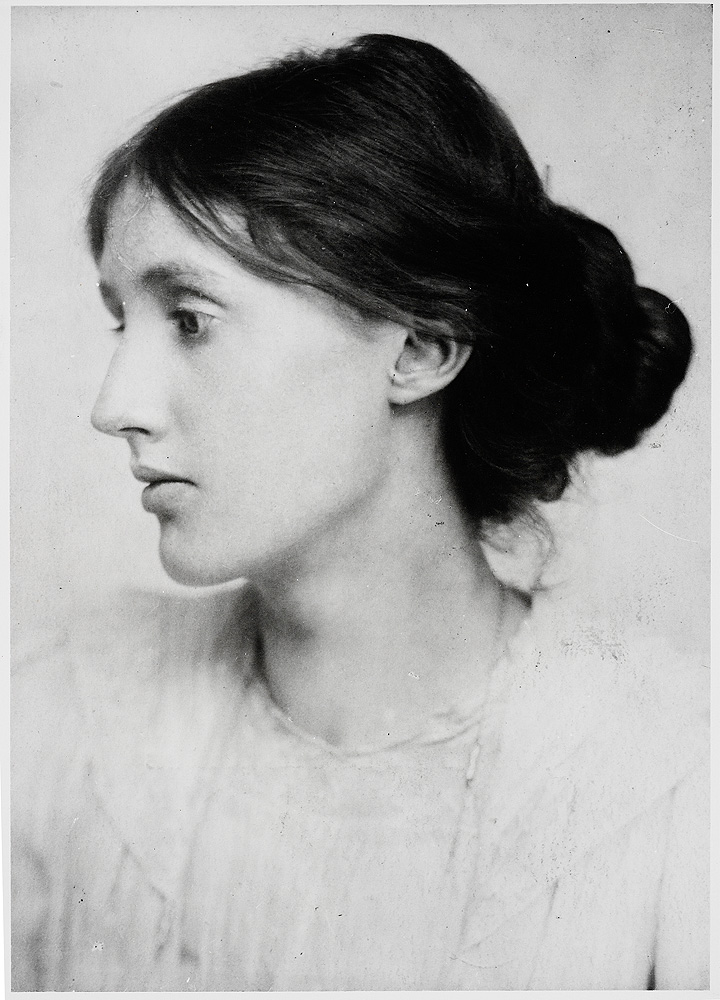 "Have you any notion how many books are written about women in the course of one year? Have you any notion how many are written by men? Are you aware that you are, perhaps, the most discussed animal in the universe?"
Virginia Woolf (1882-1941) is a British author who made an original contribution to the form of the novel - also distinguished feminist essayist, critic in The Times Literary Supplement, and a central figure of Bloomsbury group.
Virginia Woolf's concern with feminist thematics are dominant in "A room of one's own" (1929). In it she made her famous statement: "A woman must have money and a room of her own if she is to write fiction." The book originated from two expanded and revised lectures the author presented at Cambridge University's Newnham and Girton Colleges in October 1928. Woolf examined the obstacles and prejudices that have hindered women writers. She separated women as objects of representation and women as authors of representation, and argued that a change in the forms of literature was necessary because most literature had been "made by men out of their own needs for their own uses." In the last chapter Woolf touched the possibility of an androgynous mind. Woolf refers to Coleridge who said that a great mind is androgynous and states that when this fusion takes place the mind is fully fertilized and uses all its faculties. "Perhaps a mind that is purely masculine cannot create, any more than a mind that is purely feminine..." 'Three guineas' (1938) urged women to make a claim for their own history and literature.
Source: kirjasto.sci.fi
Saturday, August 26, 2006
I'd rather be a Cyborg than a goddess
 What you are about to read is really a curiosity.
Last year I stumbled over the notion of "cyber feminism". American Professor Donna Haraway is the woman behind the remarkable 'ism' and the idea is that feminists and women should consider that machines can contribute to liberation and close the gender gap. She writes:
“Up till now (once upon a time), female embodiment seemed to be given, organic, necessary; and female embodiment seemed to mean skill in mothering and its metaphoric extensions. Only by being out of place could we take intense pleasure in machines, and then with excuses that this was organic activity after all, appropriate to females”
Read more in Haraway's cyborg manifesto
Thursday, August 24, 2006

Subscribe to:
Posts (Atom)